Disturbing Mars
Aalto University, 2026-04-02
In collaboration with Xinyi Peng and Zhen Ren.
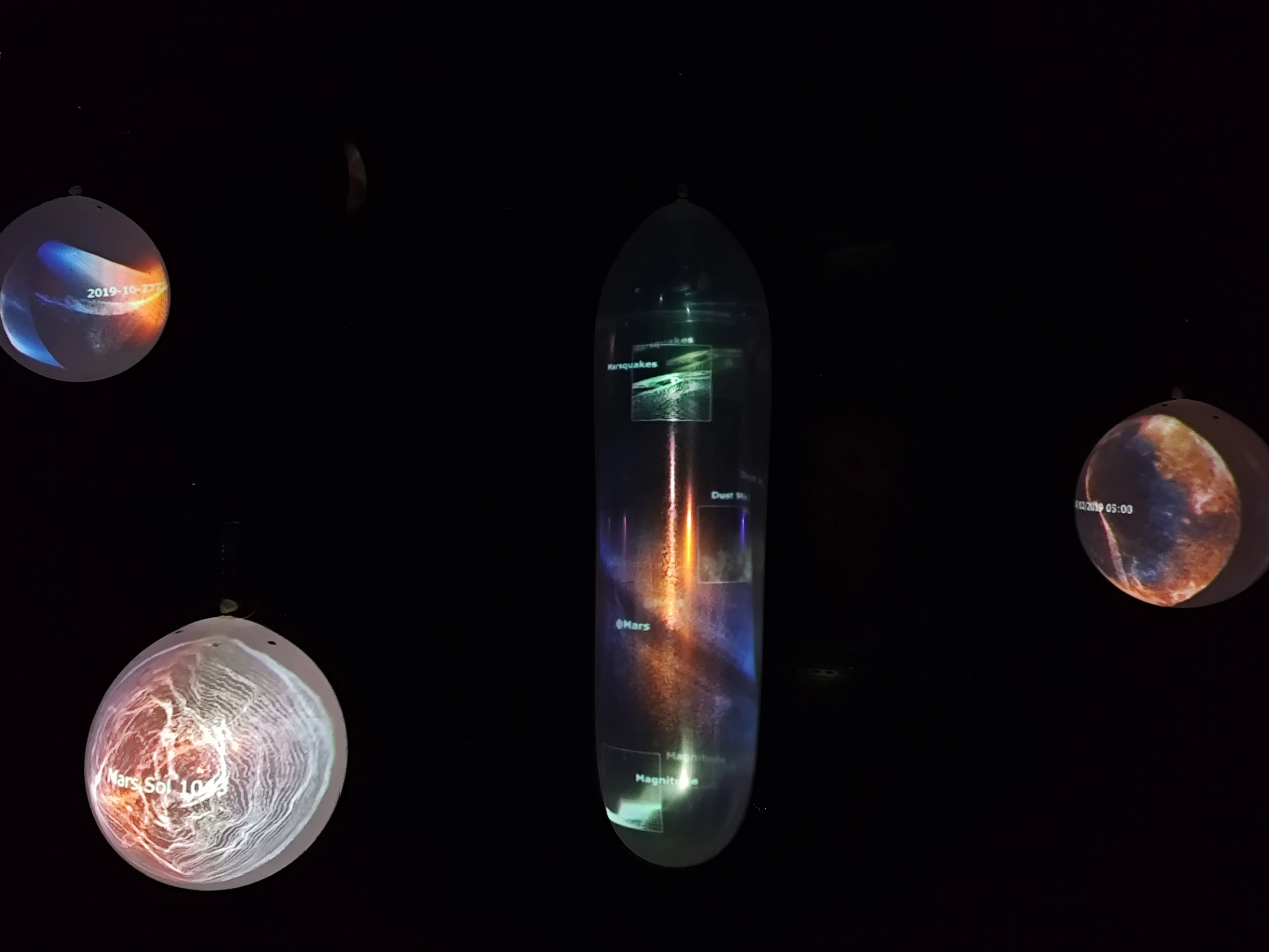
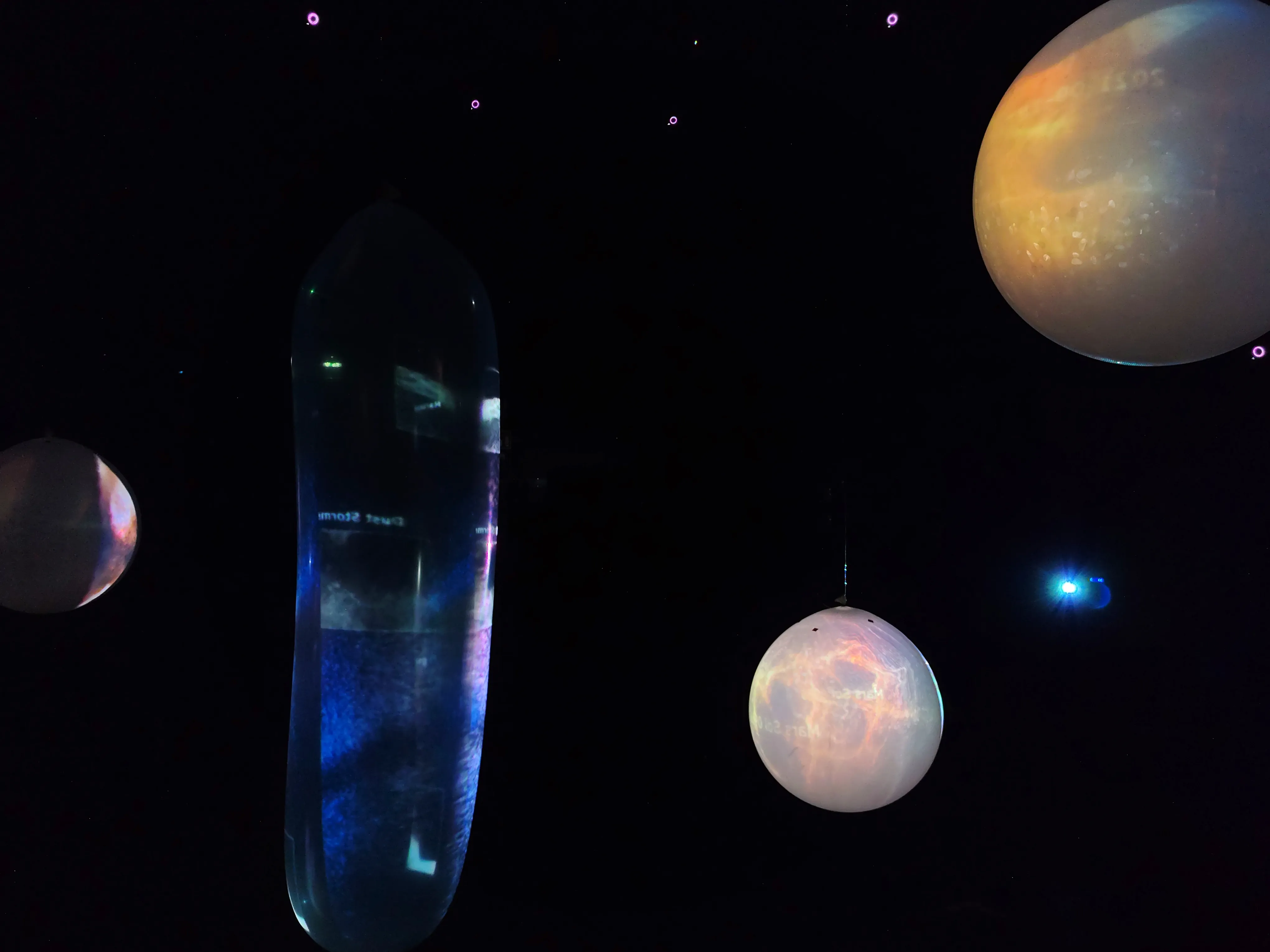
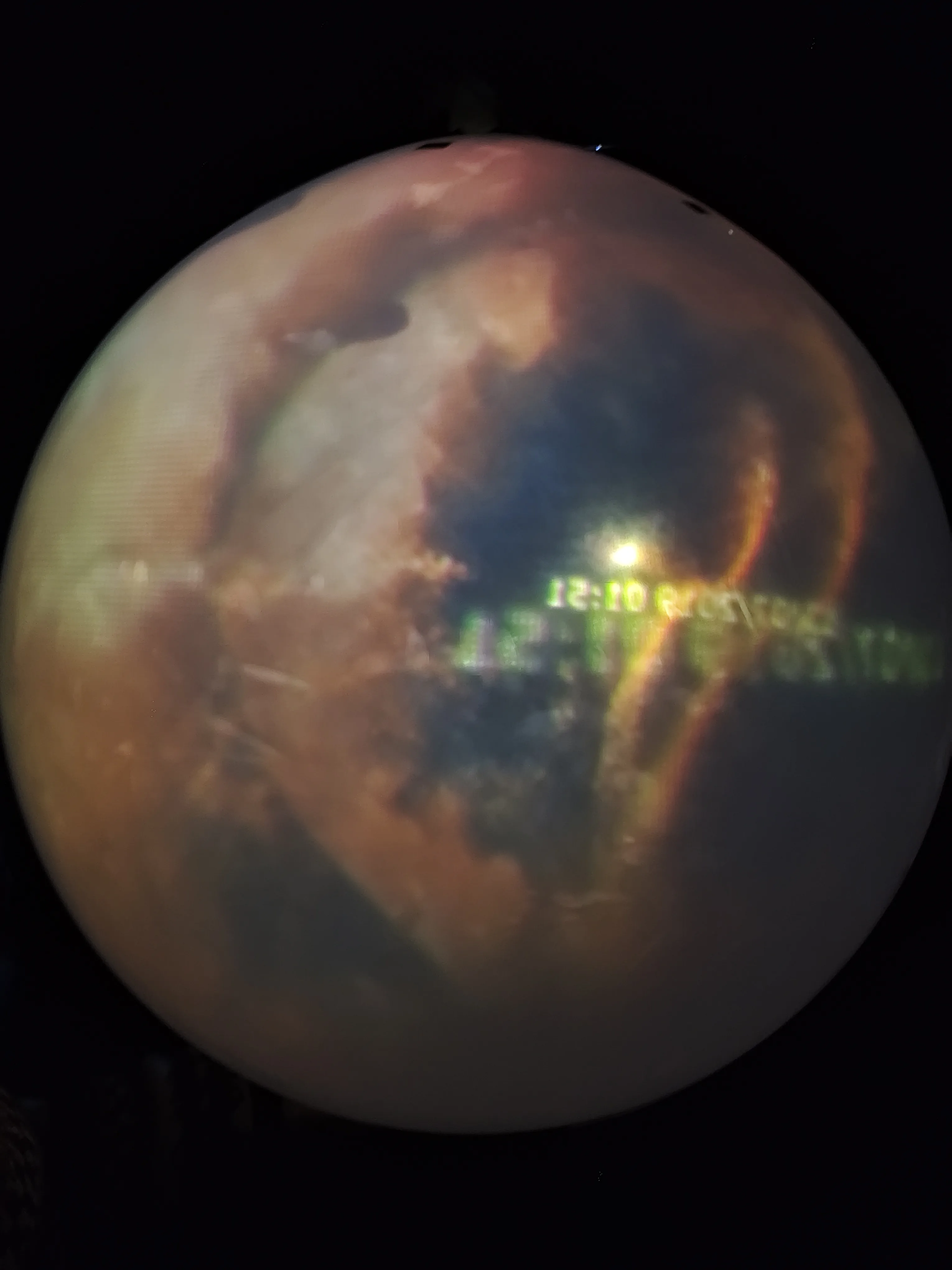
Humans increasingly imagine moving to Mars, often treating it as an empty territory. Companies such as SpaceX propose terraforming the planet to make it habitable. Yet Mars is not empty; it is an active planetary system with its own atmospheric and geological dynamics. Disturbing Mars examines how human presence interferes with these systems.
Visualization:
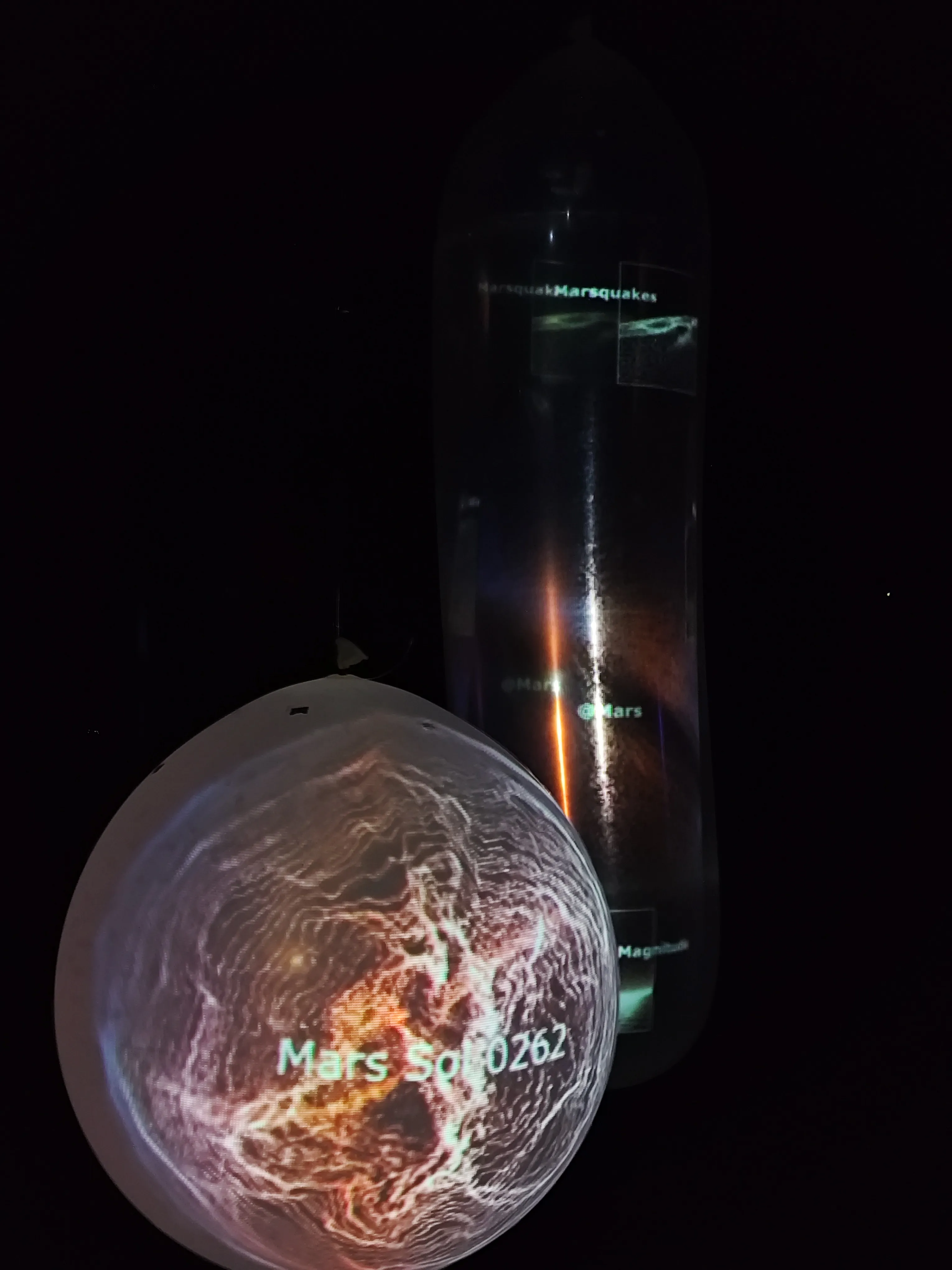
All data used in the visualizations are sourced from the InSight Marsquake Service (MQS) catalog, provided by NASA / JPL-Caltech, ETH Zurich, and IPGP.
-
Dust storms are generated from dust density and the Observed Zonal (u_obs) and Meridional (v_obs) wind components. These are combined in TouchDesigner to calculate overall wind speed, while the base movement is driven by Assimilated Dust Optical Depth (dust_assim), producing continuous dust flow.
-
Magnetic field behavior is based on InSight magnetometer data. The total magnetic field strength is calculated and used to control the deformation of magnetic lines.
-
Marsquake waves are treated as ultra-low frequency signals driven by magnitude and distance. Magnitude controls both the size of vibrations (total energy) and movement speed (kinetic energy), while distance simulates wave propagation and scattering through the Martian crust.
Interaction:
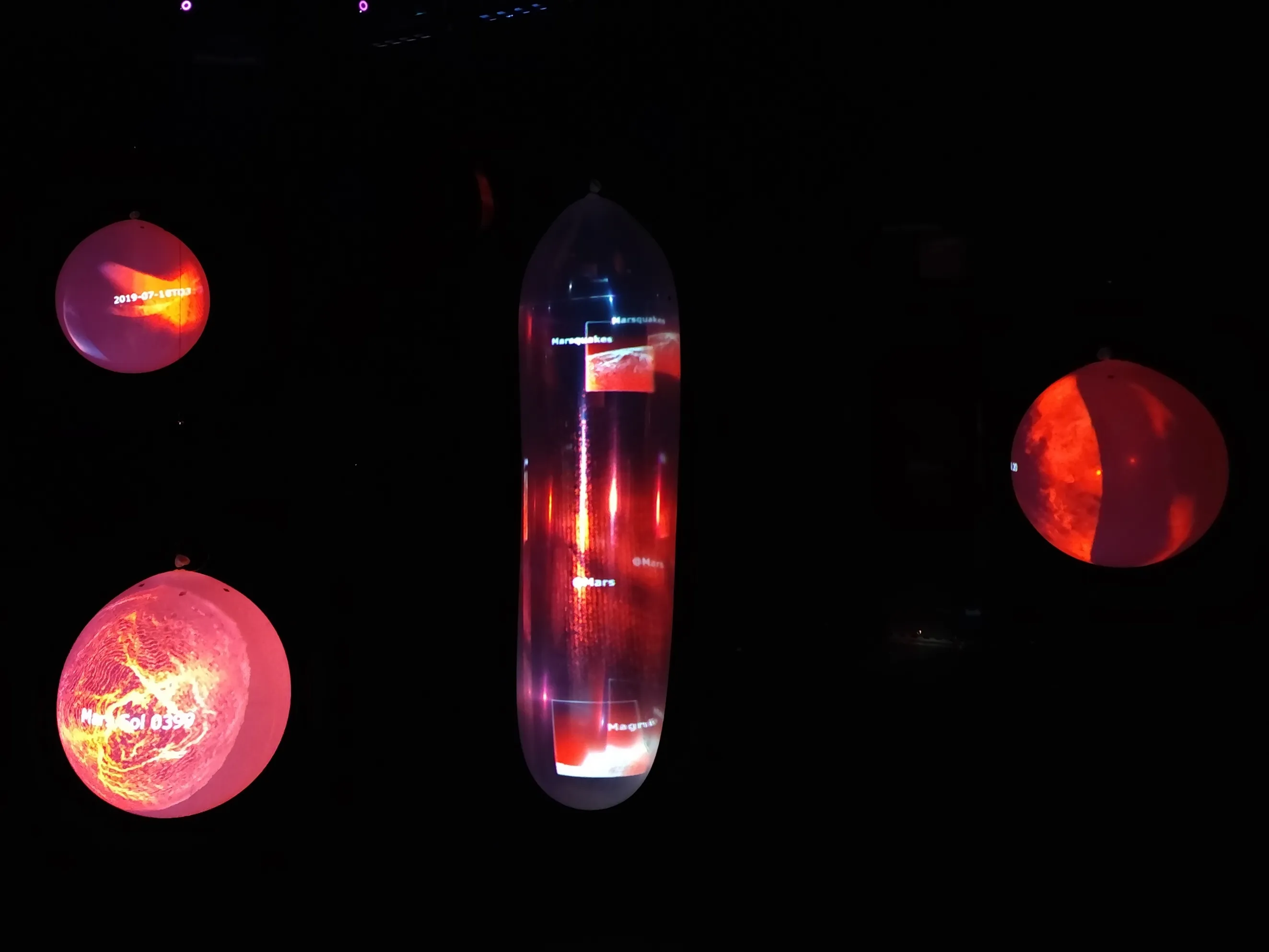
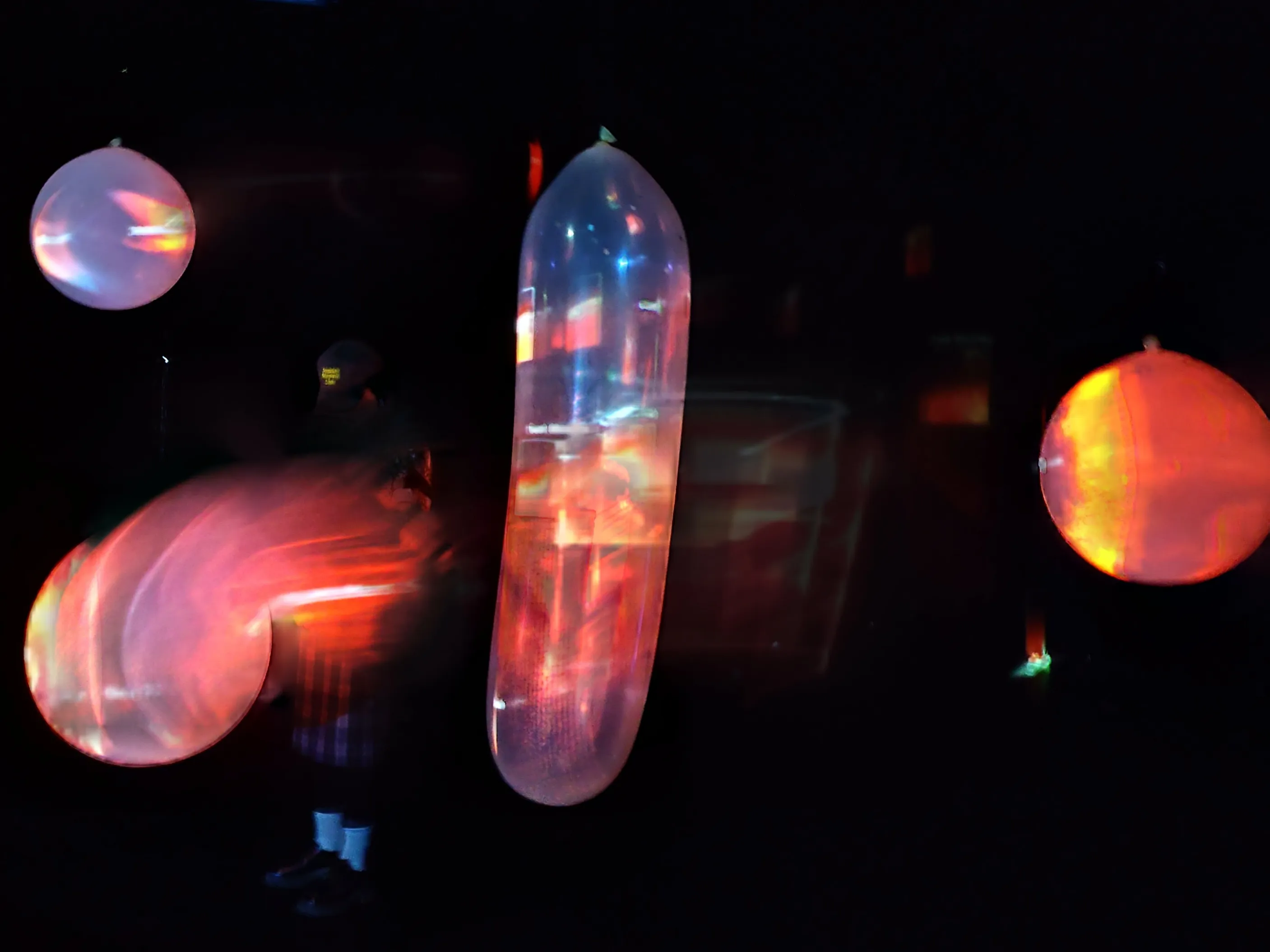
When a visitor touches and interacts with a balloon, it physically shakes, injecting force into the system. This disturbance amplifies and destabilizes all visual systems. As interactions accumulate, the system gradually shifts toward a red state, marking the increasing impact of human interference. In the final stage, balloons are physically popped, producing an irreversible break in the system.
Mechanical System:
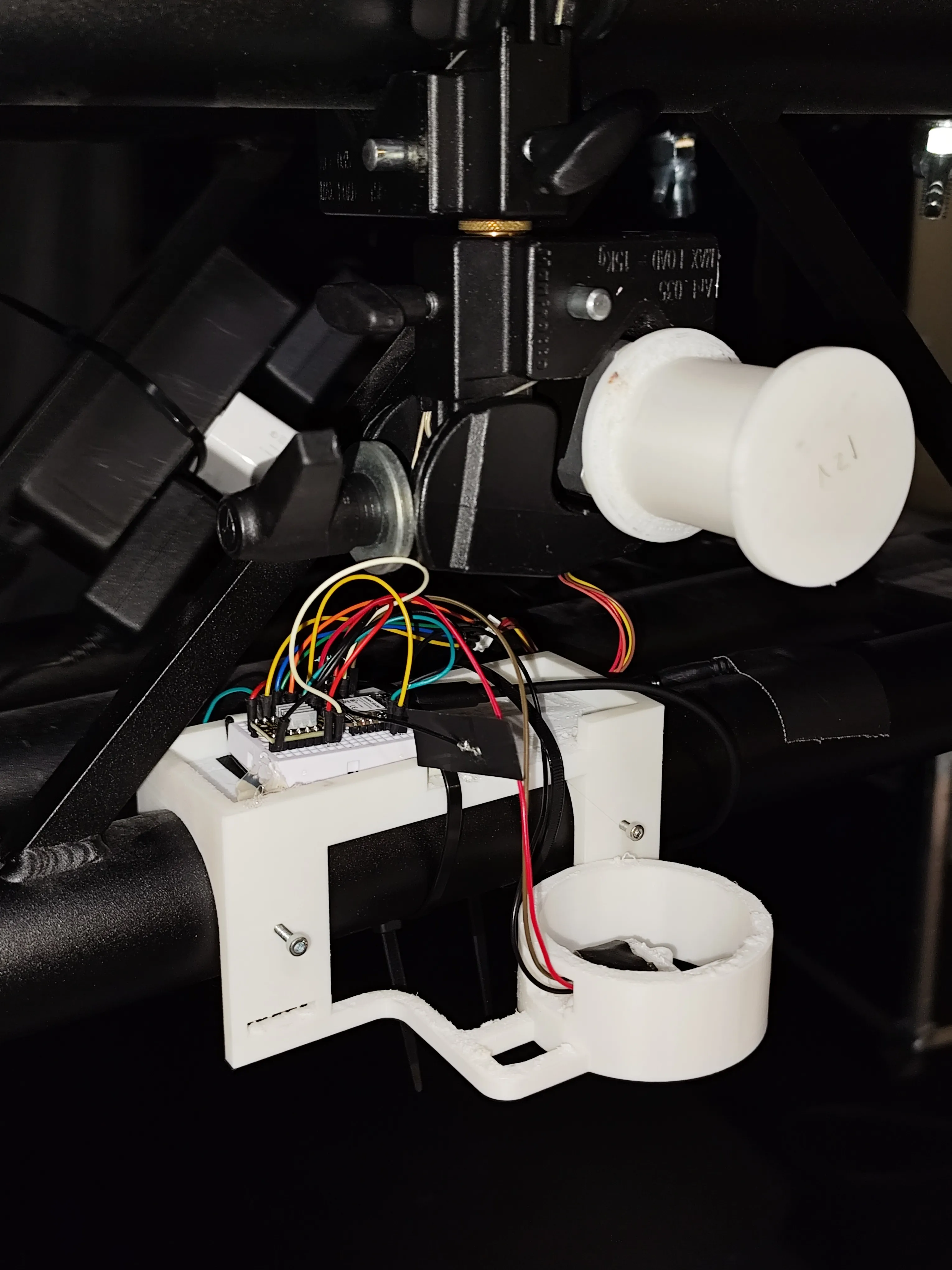
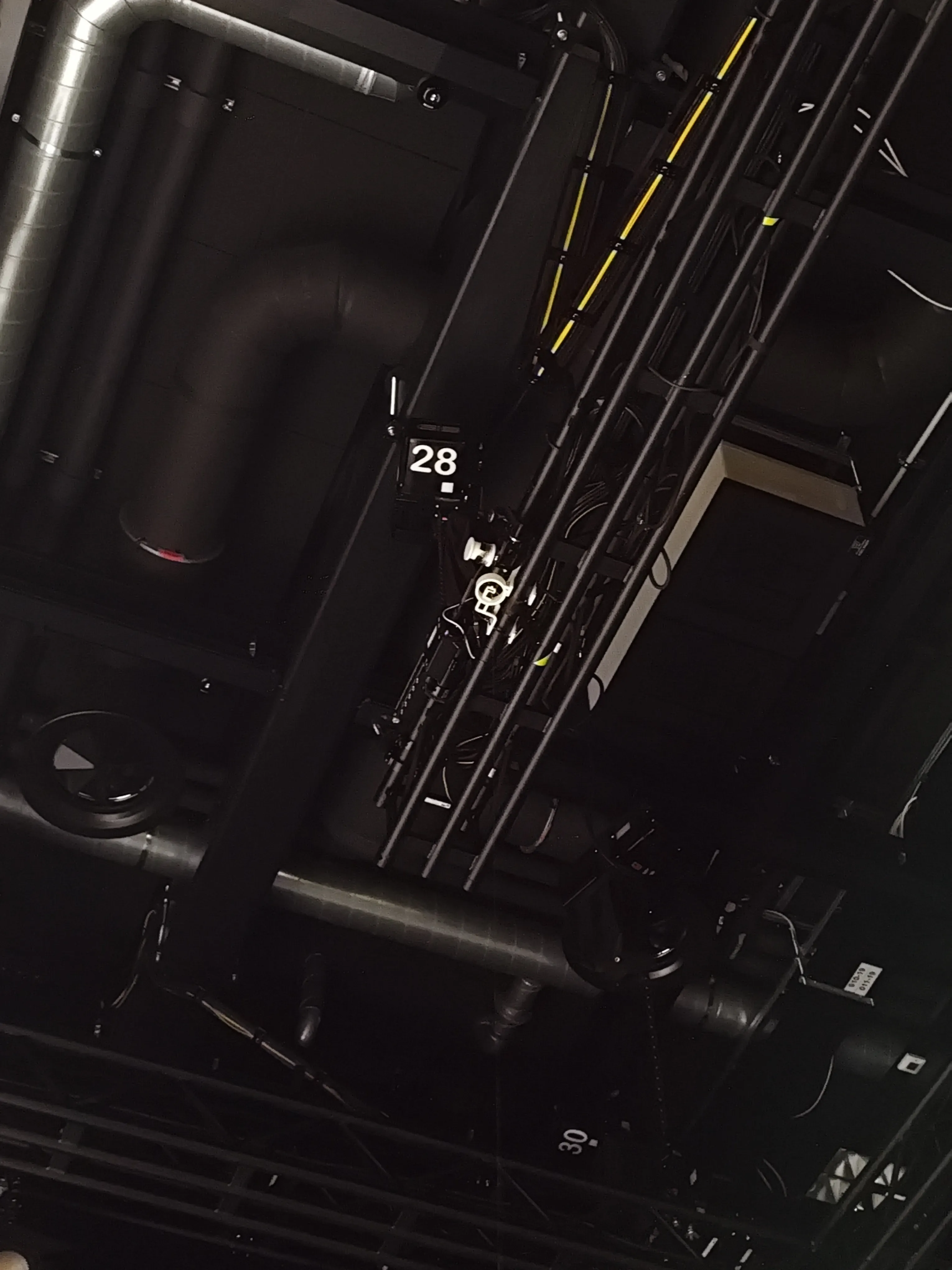
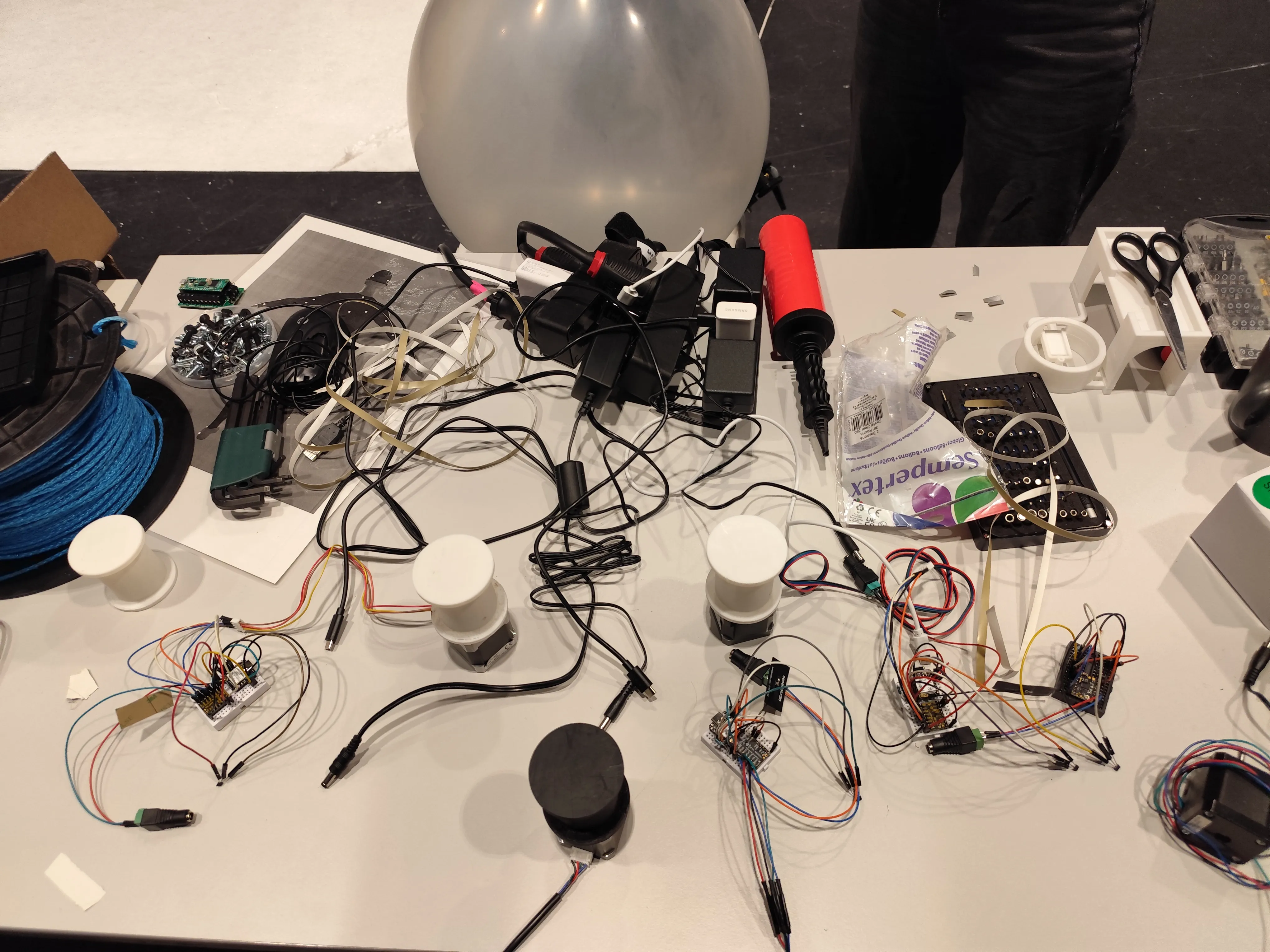
Each balloon is suspended from the ceiling and controlled by stepper motors. A 3D-printed wheel mechanism is used to regulate the height of the balloons, with all mechanical components housed in a ceiling-mounted structure.
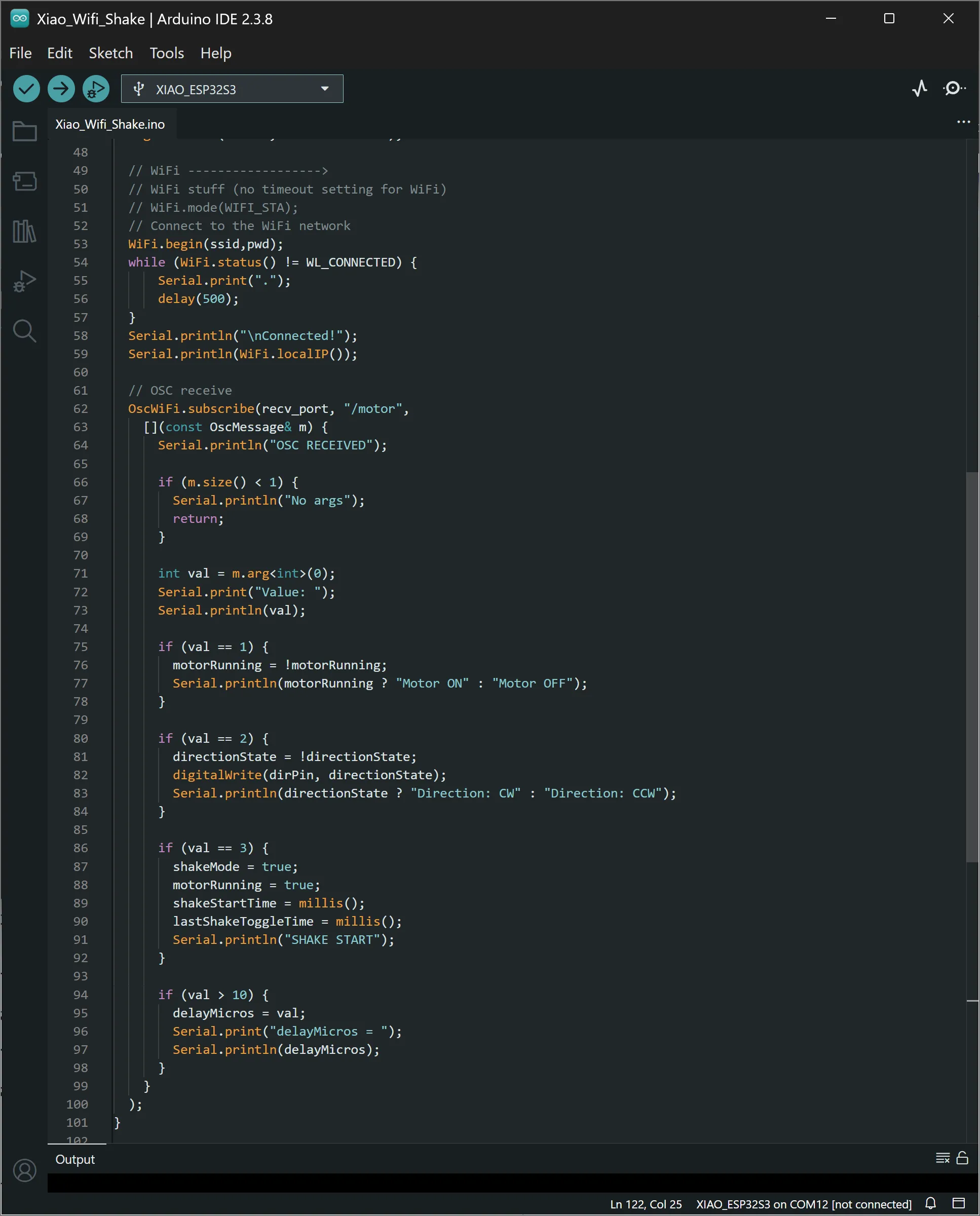
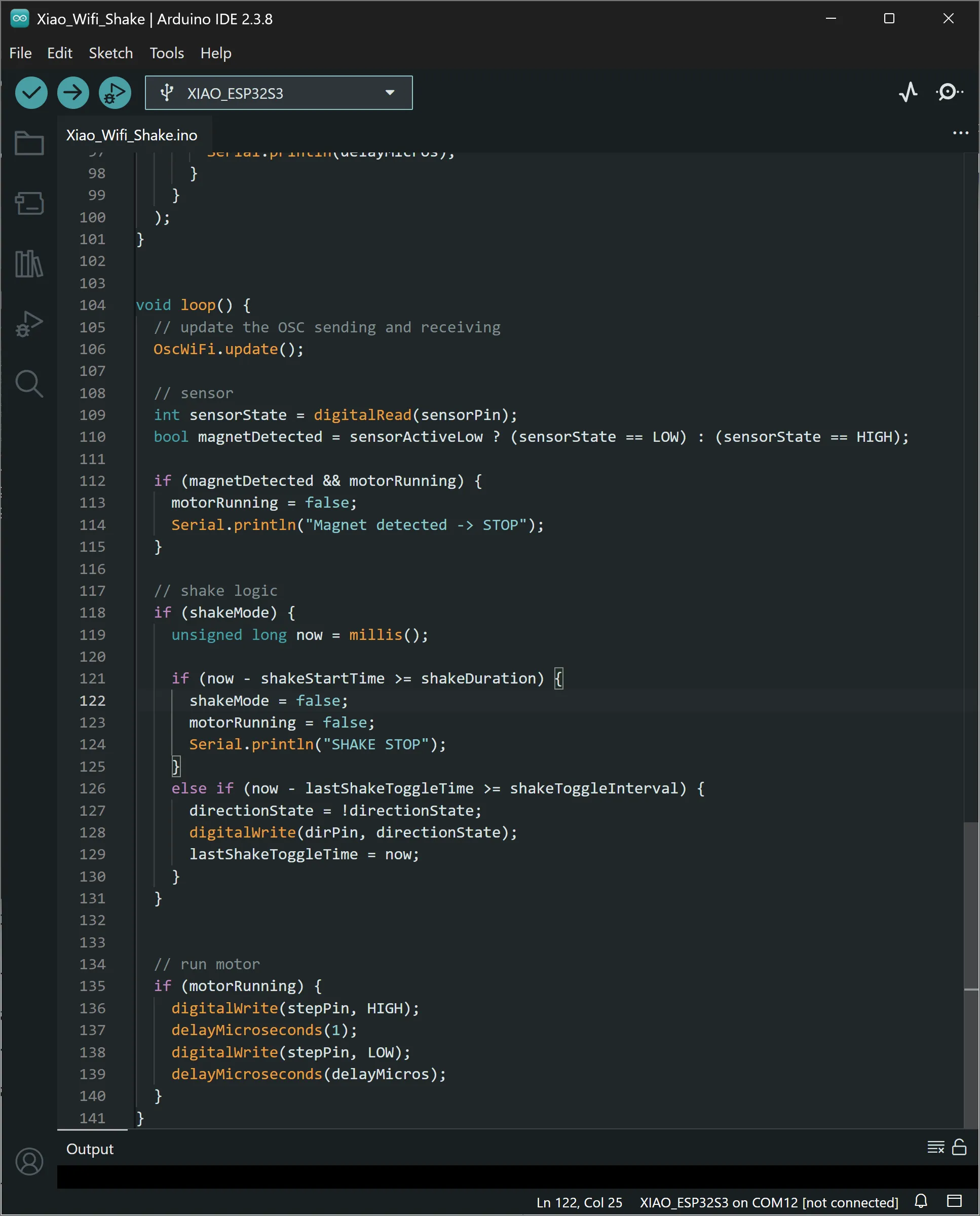
Xiao microcontrollers communicate via WiFi using OSC, controlled through TouchDesigner. A magnetic sensor and magnet at the top of each balloon limit vertical movement for safety.
Four balloons are tracked using infrared motion capture, enabling precise projection mapping. The semi-transparent material creates a hologram-like effect, making the visuals appear embedded within the balloons.